Perplexity released Portable Computer for Windows on September 14, bringing its multistep AI agent onto powerful Nvidia-equipped PCs while exposing a 24GB VRAM threshold that keeps the first version out of reach for most ordinary computers. The release is a practical test of a bigger idea: an agent can keep files, models, scheduling, and tool use on a user-owned machine, then ask before sending selected work to the cloud.
Evidence note: researched September 16, 2026, using Perplexity and Nvidia product material plus independent reporting from Tom’s Hardware, Hardware Busters, and Tom’s Guide. Toolsfine has not independently installed, benchmarked, or security-tested Portable Computer. Hardware support, plan access, models, connectors, prices, and privacy behavior can change.
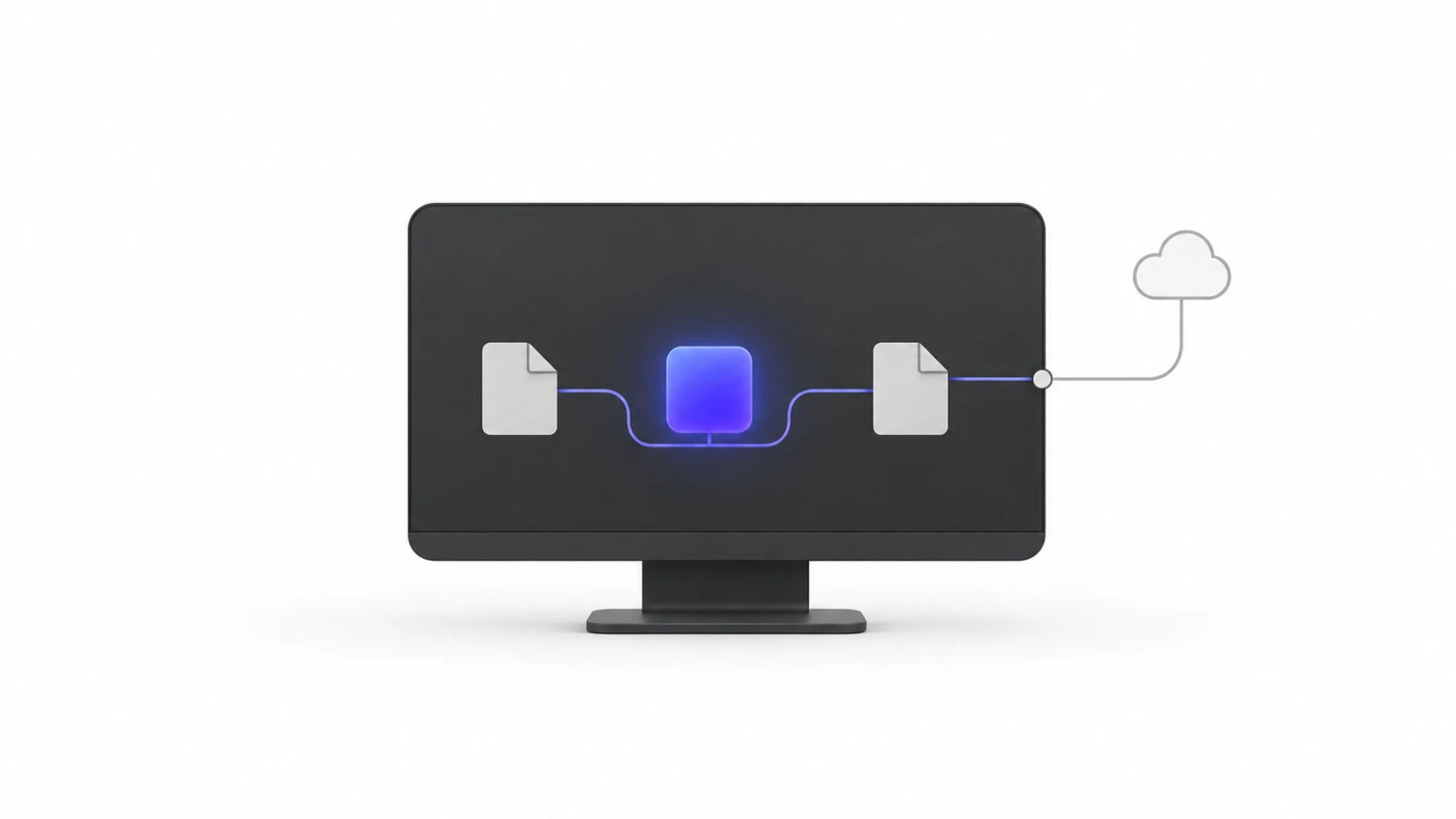
At a glance
| Question | Confirmed answer |
|---|---|
| What launched? | Portable Computer inside the existing Perplexity app for Windows. |
| When? | September 14, 2026. |
| What runs locally? | The model, agent harness, orchestrator, scheduler, task queue, and local search index. |
| Minimum graphics memory? | 24GB of VRAM on a supported Nvidia GeForce RTX or RTX PRO GPU. |
| Who gets access? | Pro and Max subscribers on individual and enterprise plans. |
| Can data still reach the cloud? | Yes, for search or frontier-model work, but Perplexity says the app asks permission first. |
| Does local work use Computer credits? | Perplexity says locally completed work does not consume Computer credits. |
What Perplexity launched
Perplexity says Portable Computer now runs through its existing Windows app for Pro and Max subscribers. Unlike its cloud-hosted Computer agent, Portable moves the local model and the machinery that plans, schedules, and executes long-running workflows onto the PC.
The agent can work with documents, spreadsheets, presentations, PDFs, code, and images in approved folders. It can also use local MCP servers to reach desktop tools and run recurring jobs. Nvidia lists connectors for Outlook, OneDrive, Word, Google Drive, Gmail, Slack, and GitHub, although connecting a cloud service obviously introduces a separate network and data boundary.
What “local” means—and where it stops
The useful distinction is not simply local model versus cloud model. Perplexity says the agent harness, orchestrator, scheduler, durable task queue, and search index also stay on the machine. That should let a workflow continue across files and tools without uploading every document to a hosted chatbot.
Portable is still hybrid when the task requires current web information or more advanced reasoning. It can incorporate Perplexity Search or one of more than 15 frontier models. The company says it asks the user before sending anything from the device to the cloud. That approval is meaningful, but users should inspect the exact payload rather than treating a generic permission prompt as proof that no sensitive context is included.
Tom’s Guide noted the same tradeoff when Portable first appeared on Linux: local execution can reduce routine data exposure, while cloud escalation, external connectors, and agent permissions still need careful review.
The 24GB VRAM gate is the real limitation
On-device inference requires at least 24GB of graphics memory. That is not the same as system RAM, and it excludes many recent gaming PCs. Tom’s Hardware reports that qualifying consumer cards include the RTX 3090, 3090 Ti, 4090, and 5090; it also cautions that Nvidia has not explicitly confirmed the 24GB RTX 5090 Laptop GPU.
Hardware Busters points out that the RTX 5080 and the rest of most of the current consumer stack fall below the floor. Meeting the minimum also does not establish speed, power use, thermals, or how well the agent behaves while other GPU-heavy applications are running. No independent Windows benchmark was available when this article was researched.
Models, pricing, and the missing performance data
Nvidia names Qwen 3.8 27B as an example one-click local model, while Perplexity’s launch material says users select and download a local model from the app. The exact model list may change. More importantly, neither company published comparable Windows results for tokens per second, end-to-end task completion, energy use, or accuracy across supported GPUs.
Portable Computer requires a paid Pro or Max plan. Perplexity’s pricing page, checked September 16, listed individual Pro at $20 per month and Max at $200 per month; enterprise pricing and controls differ. Local tasks do not use Computer credits according to Perplexity, but the subscription, compatible hardware, electricity, storage, and any cloud work still carry costs.
Practical takeaways before installing
- Check VRAM, not just the GPU name: confirm the specific card has at least 24GB before subscribing for this feature.
- Begin with a test folder: grant access only to copied, non-sensitive files and verify what the agent can read, create, modify, and delete.
- Keep actions reversible: require review before posting to Slack, editing repositories, sending messages, or overwriting documents.
- Inspect every cloud handoff: treat the approval payload as the privacy boundary and decline when it includes more context than necessary.
- Measure the whole workflow: record task success, correction time, GPU memory use, power draw, and failure recovery—not just response speed.
- Separate vendor claims from proof: wait for independent security analysis and cross-GPU benchmarks before relying on it for confidential production work.
Bottom line
Portable Computer for Windows is notable because it moves more than inference onto the PC: the planning and execution stack comes with it. That can reduce routine cloud exposure and make long local jobs economical in credits. The launch is also narrow. A 24GB Nvidia GPU, paid subscription, unverified real-world performance, and continued cloud and connector boundaries mean this is currently a power-user and enterprise pilot—not a local agent for every Windows PC.
Sources
- Perplexity: Portable Computer for Windows is here — September 14, 2026.
- Nvidia: Perplexity Portable Computer is now available on Windows — September 14, 2026.
- Tom’s Hardware: Perplexity’s local AI agent comes to Windows — September 15, 2026.
- Hardware Busters: the 24GB VRAM floor — September 15, 2026.
- Tom’s Guide: Portable Computer’s local-first design — August 25, 2026.
- Perplexity pricing — checked September 16, 2026.